
Capping in Real Estate: A California Agent Guide
A commission cap in real estate is an annual ceiling on the brokerage's percentage take. After the agent reaches it, the agent generally keeps 100% of further commissions, minus small per-transaction fees.
A new California agent often sees the same confusing pattern after a closing: the commission check looks substantial, but the brokerage split removes a meaningful portion before transaction costs, insurance, and other charges. The agent then hears about a “cap” and wonders whether it's a genuine saving or merely another recruiting term.
Capping in real estate can improve the economics for agents who produce enough to reach the ceiling. It can also leave a newer, part-time, or slower-producing agent paying a percentage on every closing without receiving any post-cap benefit. The difference comes down to production, timing, and the complete fee schedule, not the cap headline alone.
The Split Every Agent Already Knows and What Changes With a Cap
Most California agents start with a percentage split. A plan might give the agent 70% or 80% of the commission and the brokerage 30% or 20%, respectively. The brokerage takes its share from each closing, so the agent's effective retention remains tied to production throughout the year.
Consider a $950,000 sale at a 2.5% commission rate. The gross commission associated with that side of the transaction would be $23,750. Under an 80/20 arrangement, the brokerage's share would be $4,750, leaving $19,000 for the agent before other charges. Under a 70/30 arrangement, the brokerage's share would be $7,125, leaving $16,625 before E&O, franchise, and transaction fees. These illustrations use the commission mechanics described in this brokerage comparison of commission structures.
That deduction is the part agents feel most clearly. Each additional closing produces more gross income, but it also produces another percentage payment to the brokerage. The agent may receive training, supervision, technology, compliance support, branding, and transaction assistance in return, yet the split still feels open-ended.
The question behind the cap
A cap answers the question, “When does the percentage stop?” Instead of collecting its share indefinitely, the brokerage sets a fixed annual company-dollar threshold. The agent pays the agreed percentage until the brokerage has received that maximum, then the percentage contribution usually ends for the rest of the applicable year.
The cap doesn't erase every cost. It changes the largest variable cost in the commission plan. E&O charges, transaction coordination fees, compliance charges, and other stated expenses can continue after the cap.
Practical rule: A split tells an agent how the next closing is divided. A cap tells the agent whether that division eventually changes.
The important accounting term is company dollar, meaning the amount of commission retained by the brokerage from the agent's transactions. Once company dollar reaches the cap, the agent's later commissions are no longer divided by the same percentage. That distinction is the foundation for evaluating whether a cap plan fits the agent's business.
How Capping in Real Estate Actually Works
Capping in real estate is a compensation arrangement in which the brokerage's annual company-dollar collection has a fixed ceiling. The agent pays a percentage of commission until the brokerage reaches that ceiling. Afterward, the agent generally keeps the full commission on additional transactions, subject to the plan's stated flat fees.
A useful analogy is rent with a ceiling. A tenant pays rent as income comes in, but the landlord stops collecting once the agreed annual maximum has been reached. Every dollar earned after that point stays with the tenant, apart from separate charges that the agreement treats independently.

The mechanics agents need to verify
A cap plan usually works through these steps:
- The agent closes a transaction. The commission is calculated under the agreed split.
- The brokerage receives its company-dollar share. That amount accumulates toward the cap.
- The running total reaches the ceiling. The brokerage has collected its maximum company dollar for the applicable period.
- Later transactions receive the post-cap treatment. The agent typically keeps 100% of the commission, less any fees that still apply.
Industry explanations place many cap structures in the roughly $12,000 to $30,000 range, while practical brokerage examples commonly show caps around $12,000 to $20,000. A recurring illustration uses an 80/20 plan with a $16,000 cap, according to Total Brokerage's explanation of commission caps.
The cap is measured in gross commission paid to the brokerage, not in the agent's net income. Under an 80/20 plan, the agent must generate enough gross commission income for 20% of it to equal the cap. A $16,000 cap therefore represents brokerage company dollar, not $16,000 removed from the agent's take-home pay after expenses.
Timing and fees change the result
The reset period deserves careful attention. Some brokerages use a calendar year, while others use an anniversary year beginning when the agent joins. A July start date can therefore create a different first-year experience from a January start date, even when annual production is identical.
Small per-transaction fees may also continue after capping. These charges can cover transaction processing, compliance, technology, E&O, or risk management. The post-cap split may approach 100%, but the agent should calculate the net amount after every fee listed in the agreement.
The Math Behind Hitting Your Cap
An agent on an 80/20 split with a $16,000 cap reaches the threshold when the brokerage's share totals $16,000. Since the brokerage receives 20% of gross commission income, the agent needs $80,000 in gross commission income. The calculation is $80,000 multiplied by 20%, which equals $16,000.
At a 2.5% commission rate, that income represents approximately $3.2 million in closed volume. The break-even illustration appears in this guide to the economics of capping. Treat the volume as a starting point, not a guaranteed target. The agent's side of the transaction, commission agreement, concessions, and deal-specific deductions can all change the result.
A California coastal agent can convert the income target into a deal target by using the typical price point and commission earned per closing. Higher commission per transaction means fewer closings to reach the cap. Smaller or less consistent commissions keep the agent on the split longer.
A simple production map
| Production Pace | Deals to Cap | Approx. Volume to Cap | Months to Cap (Annualized) |
|---|---|---|---|
| High commission per closing | Varies by commission size | About $3.2 million at 2.5% | Earlier in the year |
| Moderate commission per closing | Varies by commission size | About $3.2 million at 2.5% | Midyear potential |
| Low or irregular commission per closing | Varies by commission size | About $3.2 million at 2.5% | Later, or not reached |
The table keeps the same break-even volume, while the number of required deals changes with each transaction's commission. Agents can use a real estate commission calculator guide to test different prices, commission rates, and split assumptions.
Timing matters more than the headline
Production pace determines whether reaching the cap creates meaningful savings. An agent who closes steadily may hit the threshold early and receive the post-cap treatment on several later transactions. An agent facing a three-month drought may reach it much later, or never. Until the cap is reached, each closing continues to send the brokerage its percentage share.
The reset date can change the outcome even when annual production looks identical. Under an anniversary-year system, the cap period begins on the agent's hire date rather than January. Someone joining late in the calendar year may have limited time to reach the threshold before the reset. An anniversary that starts during a strong production period can provide a more favorable path.
The key break-even question is not only, “Can I reach the cap?” It is, “How many transactions will close after I reach it?” The answer shows whether the cap meaningfully lowers the agent's annual compensation cost.
A cap creates value only through the transactions completed after the agent reaches it.
Cap Models Versus Zero Split and Flat Fee Plans
A cap model, a zero-split plan, and a flat-fee plan all shift risk between the agent and brokerage. The right comparison isn't the advertised split by itself. It's the combined cost of the percentage, transaction charges, monthly or desk fees, and support the brokerage provides.
| Dimension | Cap Model | Zero Split | Flat Fee |
|---|---|---|---|
| Brokerage compensation | Percentage until an annual ceiling | No percentage split, with fees instead | Set fee per closing |
| After the threshold | Agent keeps nearly all commission, less stated fees | Same basic zero-split treatment from the beginning | Fee remains fixed regardless of commission size |
| Support included | Often bundled with split and cap | Varies, with more services potentially billed separately | Varies by brokerage agreement |
| Best fit | Agents likely to exceed the cap | Agents with enough margin to absorb fixed charges | Agents seeking predictable cost per transaction |
| Main risk | Never reaching the ceiling | Higher fees on every file or month | Fee can be expensive on smaller commissions |
Under a cap, the agent accepts a percentage cost early in the year in exchange for a possible lower marginal cost later. Under zero split, the agent avoids the percentage but may pay higher per-file or recurring fees from the first closing. A flat-fee brokerage charges a set amount for each closing, so the cost doesn't rise with the property's price, but it also doesn't fall after a production milestone.
Compare support with the fee structure
A percentage split may fund broker supervision, transaction review, lead generation, technology, office resources, training, and compliance support. A zero-split plan may offer some of those services, but the agreement can charge separately for them. A flat-fee model may suit an experienced agent who already has systems and referrals, while a newer agent may place greater value on coaching than on a lower headline cost.
Agents should also avoid confusing a commission cap with an investment-property cap rate. A separate resource explaining how to calculate cap rate in 2026 addresses property income and value, not the brokerage's commission ceiling.
A practical comparison should include the agent's projected GCI, expected closing count, timing of each closing, and every fee after cap. Commission structure examples can help organize that comparison before a brokerage agreement is signed.
Who Really Wins Under a Cap and Who Quietly Pays More
Cap structures financially favor agents who are likely to exceed the annual threshold. Once the brokerage has collected its maximum company dollar, the agent's next commission retains far more of its gross amount than a pre-cap transaction, although transaction and compliance fees may remain.
The same structure can be neutral or disappointing for an agent who never reaches the cap. Under an 80/20 plan with a $16,000 cap, an agent producing $80,000 in GCI pays $16,000 in company dollar. That agent has reached the threshold mathematically, but if the $80,000 arrives only at the end of the anniversary year, there may be little or no post-cap production from which to benefit. The mechanics and break-even relationship are described in this industry guide to capped brokerage plans.
A higher-producing agent tells a different story. At $400,000 in GCI under the same 80/20 structure, the uncapped share would be $80,000, but the cap limits company dollar to $16,000 before remaining fees. The difference between those outcomes explains why brokerages often use cap plans as recruiting tools for established producers.

The quiet cost for low-volume agents
A new agent may value mentorship, contract review, lead systems, and accountability, yet still fail to reach the cap because closings arrive slowly. That agent pays the percentage on each transaction while receiving no meaningful period of post-cap retention.
Part-time agents face the same issue. A cap doesn't lower the early split, and it doesn't guarantee enough production to make the ceiling relevant. An agent in a cooling market can also lose the expected benefit when pending transactions fall through or listings take longer to close.
The reset date compounds the problem. If the brokerage uses an anniversary year, a slow opening period can delay cap attainment until close to the next reset. If the plan resets on the calendar year, unfinished progress may disappear at year-end. The contract controls the result, not the recruiting presentation.
A low cap isn't automatically a low-cost plan. It's low cost only if the agent reaches it with enough time left to use the post-cap economics.
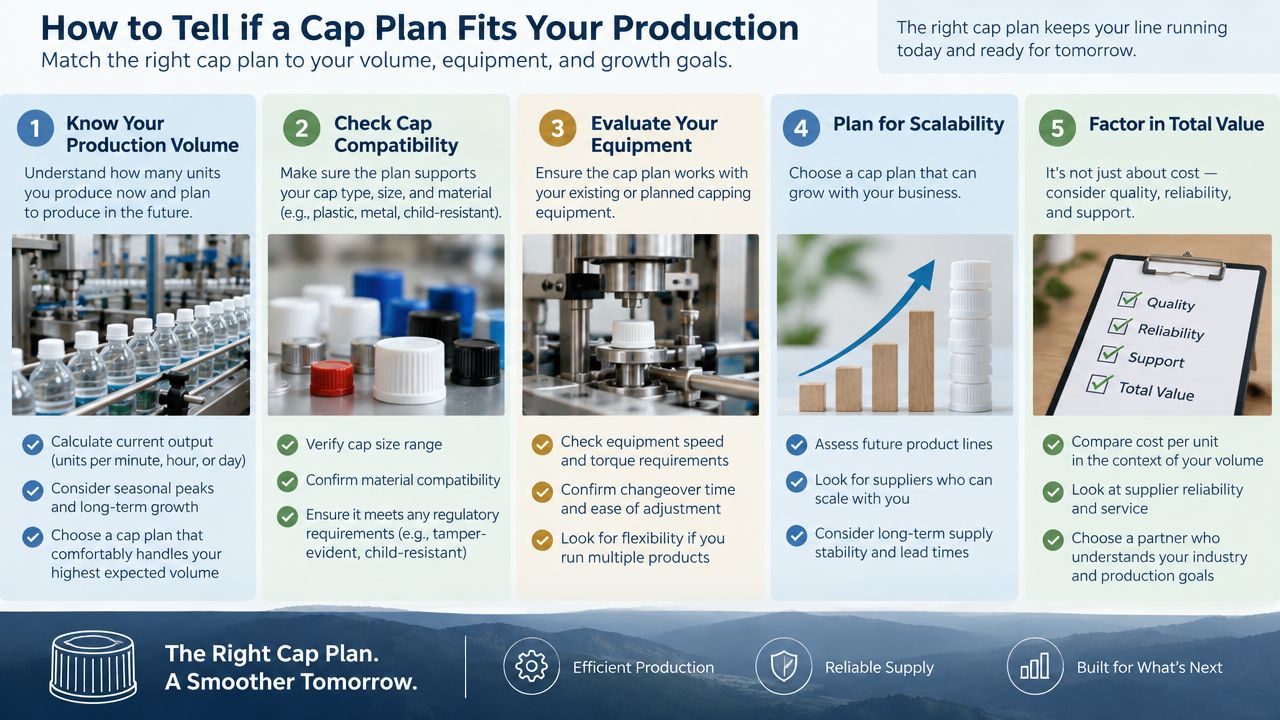
How to Tell if a Cap Plan Fits Your Production
An agent can test a cap plan without relying on optimistic recruiting projections. The calculation should use realistic production from prior closings, current pipeline quality, average commission, and the time available before the reset.
Four filters before signing
Projected GCI comes first. Estimate annual gross commission income from closed and highly probable business. Best-case assumptions can make nearly any cap appear attractive.
Deal count supplies the reality check. Divide projected GCI by the expected commission per closing. The result shows whether the agent's likely transaction pace gives enough time to benefit after reaching the cap.
The reset date changes the forecast. Confirm whether the period begins on January 1 or on the agent's anniversary date. Ask what happens to accumulated company dollar when that period ends.
The fee stack determines net income. List post-cap transaction charges, E&O pass-throughs, desk fees, technology charges, franchise fees, compliance fees, and any monthly obligations. The agreement should state whether each fee applies before cap, after cap, or throughout the year.
Run the crossover calculation
The core formula is straightforward:
- Multiply projected GCI by the brokerage split percentage.
- Compare the projected company dollar with the cap.
- Identify the closing at which cumulative company dollar reaches the threshold.
- Count the remaining realistic closings before the reset.
- Subtract all per-transaction and recurring fees from the projected agent income.
If the crossover arrives early enough to affect later closings, the cap may fit. If the agent reaches it only at the end of the period, the plan may deliver little practical value. If the agent is unlikely to reach it, a zero-split or flat-fee arrangement may produce a better result, depending on its fixed charges and support.
A broker should also ask for a written fee schedule and a sample settlement statement. That document can reveal charges that a headline split leaves out.
Choosing the Right Compensation Structure for Your Career Stage
Career stage matters because the same plan can help one agent and burden another. A new licensee may need structured coaching and contract support more than post-cap savings. An established producer may care more about marginal retention, direct payment processes, and flexible support.
| Career Stage | Annual Volume | Best Fit Structure | Why It Wins | Watch For |
|---|---|---|---|---|
| New agent | Under six closed deals | Training-focused plan with modest fixed costs | Support may matter more than a future cap | Desk fees and charges that apply before production develops |
| Mid-volume agent | One to two deals monthly | Compare cap, zero split, and flat fee using actual GCI | The crossover point may be reachable, but timing decides value | Reset date, transaction fees, and uneven closing months |
| High-volume agent | Twenty-five or more deals | Capped model or another high-retention plan | Post-cap economics can materially improve retention | Fees that continue after cap and support quality |
| Part-time or uncertain producer | Irregular closings | Low-fixed-cost or flat-fee option | Limits exposure during slow periods | Per-file costs and reduced broker access |
New agents should ask whether training includes contract education, negotiation practice, lead generation, and business planning. A cap doesn't replace those systems. If a brokerage offers a cap alongside coaching, the agent should evaluate the support as a separate benefit rather than assuming the cap itself creates production.
Mid-volume agents need a spreadsheet built from actual files. A plan with a lower split can still cost more if the agent never reaches its ceiling. A zero-split plan can also cost more than expected if every file carries a large charge and the brokerage bills separately for core services.
High-volume agents are the clearest candidates for a cap, especially when the contract confirms the reset rules and post-cap fees. Still, last year's production isn't a guarantee of next year's closings. The calculation should be reviewed at every anniversary cycle.
Ashby and Graff offers California agents flexible commission arrangements, including zero broker splits, broker support, mentorship, training, and resources for lead generation, negotiation, and business planning. Those features give an agent another structure to compare against a cap, especially when the agent wants to test projected volume against fee-free alternatives.
Agents comparing brokerage plans can take their projected GCI, closing schedule, reset date, and complete fee list to Ashby and Graff for a direct conversation about available compensation and support options. The brokerage serves California markets including Los Angeles, Orange County, San Diego, and the San Francisco Bay Area, so an agent can evaluate the numbers against a real career plan rather than a headline split.