
7 Real Estate Lead Generation Programs for Agents
No single real estate lead generation program guarantees quality appointments or positive ROI. California agents are choosing among three very different economic models: paying for portal visibility, paying only after a closing, or building an owned lead engine with advertising, software, automation, coaching, or brokerage support. Each model shifts risk in a different direction.
The useful comparison isn't just which platform produces the most contacts. It's who owns the relationship, how the program qualifies intent, how quickly an agent must respond, what follow-up the system demands, and whether the model fits the target market. Agents also need to review upfront costs, referral terms, database ownership, contract restrictions, implementation effort, and the resources available inside the brokerage.
Real estate lead generation has become more expensive in competitive markets. One 2026 industry analysis of prospecting economics reports that portal-lead costs rose 1,107% since 2015, reaching an average of $181 per lead in 2026, while national conversion rates fell as low as 0.4%. That pressure makes response speed, CRM discipline, and nurture more important than raw lead volume.
For agents who want in-house support, Ashby & Graff offers certified mentors, training, free lead-generation resources, business planning support, and coverage across Los Angeles, Orange County, San Diego, and the San Francisco Bay Area. Its brokerage details and agent resources are relevant for professionals who want to build a system rather than purchase contacts without operational support. Agents evaluating automation can also review practical applications such as chatbots for real estate.
1. Zillow Premier Agent and Zillow Preferred
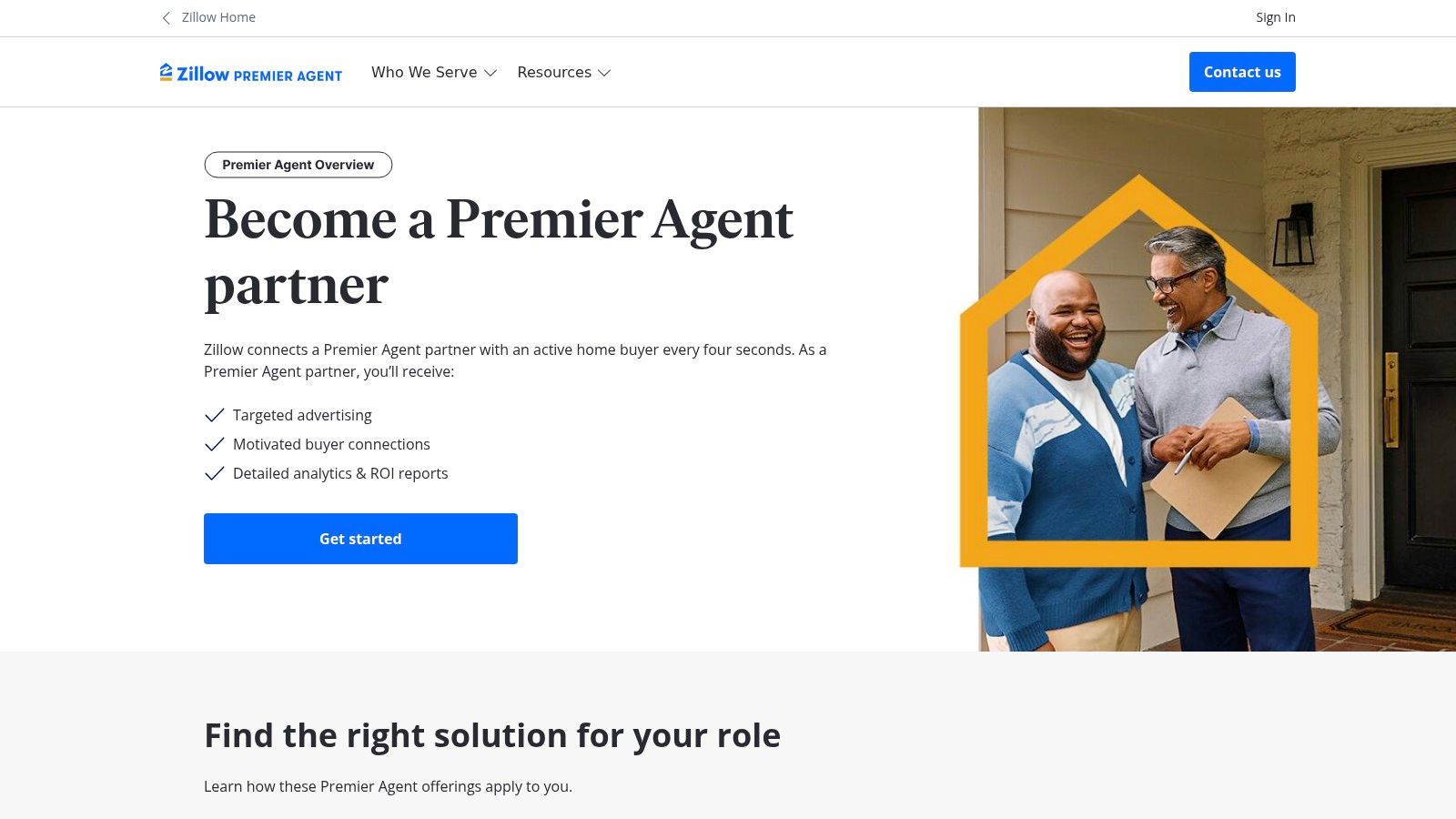
Zillow offers two distinct paths, and agents shouldn't evaluate them as though they were the same product. Zillow Premier Agent is primarily a market-based advertising program. Agents select ZIP codes, purchase visibility, and receive consumer connections through calls, emails, tour requests, and related tools. Connection volume depends on the agent's share of visibility in the chosen market, so the economic exposure begins before a transaction exists.
Zillow Preferred uses a different structure where available. It's an invite-only, pay-at-close referral model in Enhanced Markets, with a success fee tied to a completed transaction. That option can reduce upfront advertising exposure, but participation isn't guaranteed, and eligibility is performance-gated.
Where the model fits
Premier Agent makes more sense for an agent or team with a defined ZIP-code strategy, enough budget to sustain visibility, and a response process that handles inquiries immediately. In Los Angeles and Orange County, a broad geographic purchase can become difficult to manage because neighborhood knowledge, showing coverage, and follow-up quality can vary across a large service area. A tighter territory usually makes lead routing and personal relevance easier.
San Diego agents should also distinguish between buyer inquiries generated from active listings and seller opportunities that require longer nurture. Zillow's mobile app and integrated performance tools help agents manage connections, but the platform doesn't remove the need for a CRM process, appointment qualification, or consistent reactivation.
Practical rule: A portal lead program should be launched only after the brokerage or team has assigned response coverage, defined lead stages, and written the first follow-up sequence.
Before signing, agents should ask for the full commercial terms, not just the advertised monthly commitment. Important questions include:
- ZIP-code pricing: What is the exact visibility cost in the selected territory?
- Contract restrictions: Are there early termination fees or minimum commitments?
- Referral terms: What success fee applies to Zillow Preferred referrals?
- Lead ownership: Can contacts remain in the agent's database after the relationship ends?
- Coverage expectations: Who responds when the primary agent is showing property or unavailable?
Zillow is strongest for agents who want portal exposure and can tolerate variable acquisition costs. It isn't the best first purchase for a new agent without a database, a mentor, or a reliable follow-up workflow. Those agents may gain more from structured real estate lead generation strategies before committing to market-based advertising.
2. Realtor.com ReadyConnect Concierge
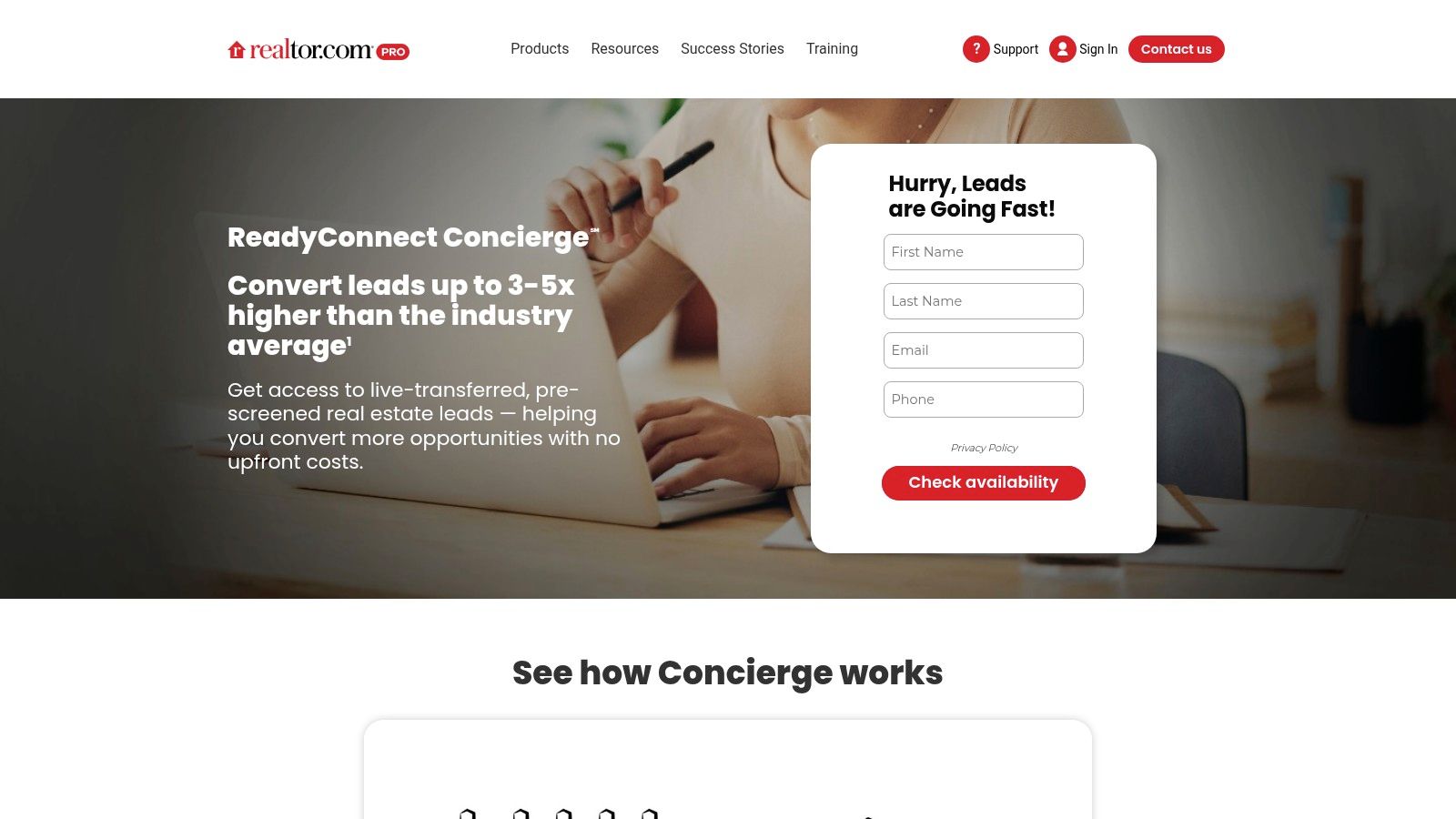
ReadyConnect Concierge is built around a different economic model from subscription lead programs. Realtor.com screens consumers and warm-transfers them live to participating agents, giving the agent a real conversation instead of a silent form submission. That can reduce the time spent sorting active buyers or sellers from casual browsers, although the transfer does not guarantee intent, readiness, or a signed client.
The ReadyConnect Concierge program charges through performance pricing. The agent pays a referral fee when a transaction closes rather than paying upfront for portal exposure. That preserves cash before closing, but the fee still has to fit the agent's commission structure, expected conversion rate, and local California economics.
A live transfer changes the first call
The concierge team handles initial screening and connection. The agent then owns the relationship, including market guidance, lender coordination, showing access, documentation, and follow-up after the call. A warm introduction improves the starting point, but agents still need a clear discovery script and a process for contacts who are interested but not ready to transact.
This program can suit newer agents who want limited upfront exposure, as well as experienced agents who prefer a closing-based referral arrangement. It can also fit California teams with dependable transaction systems that do not want to purchase portal advertising directly. In Los Angeles or the Bay Area, available opportunities and agent capacity can vary by market and season, so managers should treat the program as a source of introductions, not a guaranteed pipeline.
The dashboard, coaching insights, snooze options, and office-hours controls help teams match lead flow to staffing. They only work when settings reflect real availability. An agent who accepts transfers during showings or outside workable hours risks inconsistent responses and a poor first client experience.
Confirm these terms before enrolling:
- Referral percentage: The exact fee and payment trigger.
- Agreement duration: Whether obligations continue after the initial connection.
- Lead definition: What qualifies as a referral and how disputes are handled.
- Market availability: Whether the selected California territory has suitable opportunities.
- Coverage rules: How missed calls, unavailable agents, and team routing are managed.
ReadyConnect Concierge fits agents who prefer a closing-based fee and can convert live introductions. It does not replace a database, CRM, or defined nurture plan. Brokerage support matters here: teams with shared coverage and transaction operations can absorb transfers more reliably, while solo agents should verify their response capacity before enrolling.
3. Realtor.com Connections Plus
Connections Plus sells access to inquiries through a subscription, so its economics differ from a closing-based referral arrangement. The Realtor.com Connections Plus offering provides real-time buyer and seller inquiries, automated follow-up tools, and a pipeline dashboard. The agent pays before knowing which contacts will convert, then keeps the economics of a closed transaction separate from a referral fee.
That arrangement can suit a team with a defined marketing budget, steady staffing, and brokerage systems for CRM use and lead routing. It shifts more risk to the agent, however. Paying for coverage does not guarantee qualified conversations, and broad territory selection can waste budget when the team lacks time to review assignments and follow up.
The subscription only works with disciplined follow-up
The platform supplies inquiries and workflow features. Agents still need to respond promptly, make the first conversation useful, and nurture contacts who are not ready to transact. Automated messages can maintain contact, but they cannot replace questions about financing, timing, neighborhoods, property condition, or the seller's reason for moving.
Market fit also matters. An Orange County agent focused on a narrow group of communities may use the program to support a defined local strategy. A Bay Area team serving several counties or client segments may gain more from the dashboard and CRM integrations, provided routing responsibilities are clear. A solo agent should avoid buying broad coverage without enough capacity to monitor conversations and maintain follow-up quality.
Before launch, request a written quote and confirm:
- Monthly commitment: Which services and lead volume are included in the market-specific plan?
- CRM integration: Which existing systems can receive, assign, and track leads?
- Automation controls: Can messages be customized by buyer, seller, location, and stage?
- Cancellation terms: What notice period, minimum term, or termination cost applies?
- Performance reporting: Can the agent separate inquiries, conversations, appointments, signed clients, and closed transactions?
The program is a reasonable fit when predictable spending supports an established pipeline process. It is a poor fit when success is measured only by delivered names. The 2025 NAR technology survey found that 39% of respondents identified social media as the source generating the highest number of quality leads, ahead of CRM at 23% and local MLS at 17%. That comparison reinforces a practical rule: judge lead quality and conversion, not delivery volume alone.
4. HomeLight
HomeLight's economic model centers on matching and referrals, not purchasing visibility in a specific ZIP code. Consumers are connected with agents through profiles and performance signals, and participating agents accept referral agreements. The traditional arrangement charges when a transaction closes, while HomeLight also offers pay-per-lead options in some cases through its agent referral program.
That shifts the main financial risk to the back end of the transaction. Agents generally avoid upfront media spending under the classic referral model, but the agreement controls the referral fee and duties attached to the introduction. Review those terms with the same care used for a commission plan.
A referral can arrive with clear intent, yet qualification continues after the introduction. A San Diego buyer may need guidance tied to specific neighborhoods, school preferences, or commute patterns. A Los Angeles seller may be weighing pricing, preparation, and marketing choices. HomeLight starts the conversation, but the agent's response, local knowledge, and follow-up determine whether it becomes a client.
The model fits agents who prefer costs connected to closed business, have room in their pipeline, and want access to consumer demand beyond their own advertising. It offers less control over acquisition, contact ownership, and brand presentation than an in-house campaign. Referral availability and timing also differ across California markets, so an agent should not build staffing or revenue forecasts around assumed volume.
Before enrolling, evaluate the agreement and the operating handoff:
- Referral economics: Confirm the exact fee, payment trigger, and any obligations that continue after introduction.
- Qualification: Ask what information is collected before the agent receives a buyer or seller opportunity.
- Contact ownership: Clarify whether the agent may retain the relationship and add the contact to a compliant database.
- Market fit: Check which buyer and seller categories are active in the agent's territory, from San Diego to Los Angeles and other California markets.
- Brokerage support: Establish who handles referral paperwork, compliance questions, team routing, and disputes.
- Capacity: Decide whether the opportunity goes to one agent or a team pool, and who owns follow-up.
HomeLight's main advantage is risk alignment. Under the classic model, the agent does not fund every contact upfront. The trade-off is limited control over volume, timing, and commercial terms. Agents building a durable database should compare that trade-off with brokerage-supported prospecting, relationship marketing, and the resources already available inside their team.
5. Ylopo
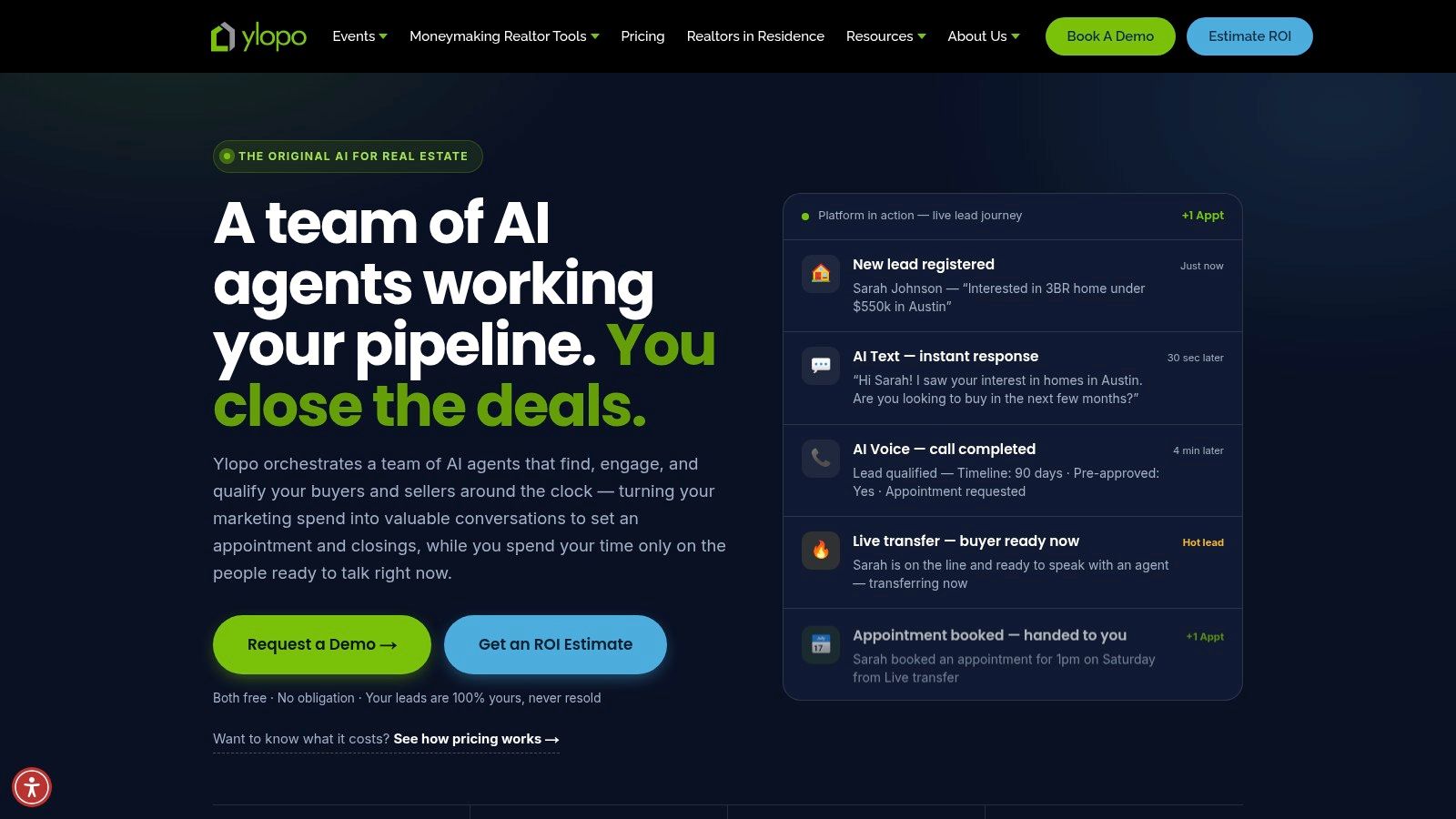
Ylopo suits agents who want to build an owned lead engine instead of relying entirely on portal traffic. The Ylopo platform combines targeted Facebook, Instagram, and Google campaigns with IDX landing pages, text and email automation, remarketing, and AI-driven follow-up. The agent or team pays for the software and advertising separately, then keeps the resulting contacts in its own database.
That economic model shifts both risk and control to the agent. Paid media does not guarantee a return, and the team must manage consent, segmentation, messaging, and response times. The upside is that the relationship is not tied to a portal subscription or a closing-based referral fee. Contact ownership also supports longer-term marketing, provided the database is maintained accurately.
Build the operating model before buying traffic
Ylopo is a stronger fit for a team serving multiple counties when an ISA, inside-sales function, or automation process can respond to new inquiries and re-engage older contacts. A solo agent in Orange County could use it for a focused buyer campaign. A larger Bay Area operation may need separate audiences, routing rules, and seller nurture paths.
The platform connects advertising, landing pages, AI follow-up, remarketing, and CRM activity in one funnel. That integration reduces handoffs, but it does not fix weak creative, broad targeting, poor qualification questions, or inconsistent human follow-up. Those gaps can waste both software fees and ad spend.
Database principle: Contact ownership also creates responsibility for permission, organization, accurate status fields, and useful follow-up.
Set the operating rules before launch:
- Audience: Choose the counties, property types, and client profiles receiving ads.
- Qualification: Define which signals trigger a call, appointment task, or longer nurture path.
- Human handoff: Specify when AI stops and an agent or ISA takes over.
- Budget boundaries: Separate software fees, ad spend, creative work, and management time.
- Reactivation: Plan relevant market updates for older contacts instead of generic automation.
Agents comparing Ylopo with other apps for lead generation should also assess brokerage support. A brokerage that supplies CRM standards, compliance guidance, ISA coverage, or campaign expertise can reduce implementation burden. Ylopo works best for professionals prepared to run marketing as a repeatable system, not as a passive lead purchase.
6. BoomTown
BoomTown is a full operating system for paid acquisition, IDX websites, CRM management, automation, lead qualification, and team training. Its BoomTown platform includes PPC and Facebook campaigns, IDX sites, performance dashboards, Smart-Drip nurture, onboarding, and an optional Success Assurance concierge service for initial qualification and appointment setting.
The economic model is broader than buying individual leads. A team pays for a connected marketing and follow-up stack, then adds advertising, implementation, and staff time to the budget. That can reduce the number of vendors and handoffs, but it also creates a larger commitment than a simple lead marketplace. The platform produces value only when agents use its modules, follow routing rules, and maintain the CRM.
Lead ownership should be settled before signing. Determine who controls the database, who handles reassignment when an agent leaves, and which brokerage standards govern permission, status fields, and follow-up. A brokerage with CRM oversight, campaign guidance, and training can make adoption easier. Without that support, the team leader carries the implementation burden.
BoomTown fits teams with defined responsibilities. A leader may oversee campaigns and reporting, an ISA or concierge may screen inquiries, and agents may concentrate on conversations, showings, and service. That structure can suit Los Angeles or San Francisco Bay Area teams that need geographic routing, specialization, and appointment coverage.
A solo agent can use BoomTown, but should examine the workload before committing. Ask what onboarding covers, who adjusts campaigns, how post-launch support works, and whether Success Assurance is optional or included in the proposed agreement. A solo operator who cannot respond quickly or maintain the CRM may pay for more system than the business can use.
Third-party reviews have cited premium pricing of roughly $1,000 to $1,500 or more per month plus setup fees, but those figures are not a universal current quote. Request a market-specific proposal and obtain software, advertising, setup, and service fees in writing.
BoomTown's practical advantages are unified reporting, structured onboarding, qualification assistance, and visibility into unassigned leads or incomplete follow-up. Its main risk is operational complexity. Choose it when brokerage leadership or team management will enforce ownership, training, and response standards. Otherwise, a smaller stack may be easier to operate consistently.
7. CINC
CINC, also known as Commissions Inc., is a marketing and operations platform for agents and teams that want paid campaigns, IDX websites, CRM functions, routing, remarketing, click-to-call tools, mobile access, and AI features in one system. Its CINC pricing page describes a scalable platform, while core plans remain quote-based and market-specific.
CINC's economic model is different from a portal referral program. The agent pays for a digital funnel that the team owns and operates. Google and Facebook campaigns attract buyer and seller inquiries, IDX pages capture browsing activity, and CRM tools route and nurture contacts. That control brings more responsibility. Someone must configure campaigns, define lead ownership, monitor costs, and maintain follow-up.
Match the platform to the operating model
CINC can suit a solo agent seeking a structured marketing system, a small team that needs shared visibility, or a brokerage operating across several California markets. A team covering San Diego and Orange County might route inquiries by geography, property type, or agent availability. A San Francisco Bay Area team may need different campaign and response rules across distinct local markets. The platform is useful only when those rules are documented and enforced.
Published add-on pricing includes CINC AI starting at $200 per month. Core plans and other features require a quote, so budgeting should separate software from advertising, implementation, dialer access, creative work, and staff time. Ask for each cost in writing before comparing the program with referral or subscription-based alternatives.
Evaluate the workflow, not the feature count:
- Campaign control: Can the team separate buyer, seller, remarketing, and geographic campaigns?
- Lead ownership: Does each inquiry reach a named agent, and can managers identify unassigned contacts?
- Qualification: Which AI or CRM steps filter and prioritize inquiries before human follow-up?
- Call handling: Does click-to-call fit the team's coverage and response schedule?
- Reporting: Can managers trace a contact from source through conversations, appointments, signed clients, and closings?
CINC's implementation support and add-ons may fit teams building in-house marketing capacity. Smaller operators should confirm who will manage the system each week. A platform cannot replace prompt responses, consistent nurture, or brokerage accountability.
CRM adoption remains a practical constraint. A 2024 brokerage survey found roughly 40% of brokerages had CRM adoption below 50%, while only about 15% reported adoption above 80%. Choose CINC when the brokerage or team can assign ownership, train users, and review follow-up. Otherwise, its range of tools may exceed what the business can operate consistently.
Top 7 Real Estate Lead-Gen Programs Comparison
| Product | Implementation complexity | Resource requirements | Expected outcomes | Ideal use cases | Key advantages |
|---|---|---|---|---|---|
| Zillow Premier Agent / Zillow Preferred | Medium, ZIP-based setup, account onboarding, possible sales/contract steps | Variable: ZIP-dependent advertising costs, possible contracts, time to manage leads; Preferred may include success fees | High portal exposure with variable connection volume driven by “share of voice”; predictable where market dominance exists | Agents seeking large portal visibility and willing to buy market share; those wanting hybrid subscription/pay‑at‑close options | Large consumer audience, flexible ad & referral models, integrated tools/mobile app |
| Realtor.com ReadyConnect Concierge | Low, managed transfers with minimal agent setup | Low upfront cost; pay referral fee at close; must handle live warm transfers | Warm, pre‑screened leads and live transfers; volume varies by market/season | Agents/teams preferring performance pricing and managed introductions without ad management | Pay‑on‑close model, real‑time qualification, backed by a national portal |
| Realtor.com Connections Plus | Low–Medium, subscription onboarding and CRM integration | Predictable monthly subscription (market‑based); internal follow‑up capacity required | Real‑time high‑intent leads with consistent flow; conversion depends on response speed | Agents who prefer predictable monthly budgeting over referral fees | Predictable spend, integrated follow‑up tools, CRM integrations |
| HomeLight | Low, referral agreement and profile setup | No upfront ad spend; referral fee at closing (per agreement); dependent on referral availability | Transaction‑ready matched leads; timing and volume can vary by market | Agents wanting classic referral marketplace and pay‑on‑close cost structure | Pay‑on‑close model, nationwide reach, vetted matching process |
| Ylopo | Medium–High, ad campaign setup, IDX pages, AI follow‑up configuration | Monthly platform fees + separate ad spend; CRM and automation/processes required | Owned leads with long‑term nurture and remarketing; scalable if follow‑up consistent | Teams/agents wanting to own contacts and diversify beyond portal leads | Multi‑channel ads, AI‑driven nurture, leads stay in your database |
| BoomTown | High, full stack adoption, structured onboarding and training | Premium monthly fees + setup; requires team adoption to realize value; ad spend for lead gen | Integrated pipeline with qualified appointments when fully implemented; high ROI with consistent use | Teams and brokerages seeking a single integrated platform with training/support | End‑to‑end stack, extensive training, optional lead‑qualification concierge |
| CINC (Commissions Inc.) | Medium–High, campaign setup, website/CRM integration, routing | Quote‑based core pricing; some add‑ons with published prices; ad spend and operational processes | Scalable lead generation across solo to enterprise; success tied to speed‑to‑lead and nurture | Solo agents through enterprise teams needing scalable, mature toolset | Mature feature set, strong integrations, some transparent add‑on pricing |
Turn Lead Volume Into a Repeatable Pipeline
The right real estate lead generation program begins with the market, not the vendor. An agent serving a compact Orange County territory may need a different system from a Bay Area team covering several cities. A new agent may need mentorship, scripts, routing, and accountability before purchasing paid traffic. An established team may be ready for a full-stack platform with advertising, AI qualification, and a staffed response desk.
The selection sequence should stay practical:
- Define the target market and budget. Identify the California counties, cities, property types, and client profiles the program must serve. Separate the platform fee, advertising spend, referral obligation, setup cost, and internal labor.
- Choose the economic model. Decide whether the business can support a subscription, prefers pay-at-close pricing, accepts a referral fee, or wants to build an owned database through advertising and software.
- Confirm ownership and terms. Review referral percentages, payment triggers, minimum commitments, termination provisions, lead-sharing rules, data retention, and CRM access.
- Assign response coverage. Set a primary agent, backup agent, office-hours policy, escalation path, and appointment calendar before leads arrive.
- Build the follow-up workflow. Define the first call, text and email sequence, qualification fields, task reminders, nurture stages, and reactivation process.
- Measure business outcomes. Track source, response time, conversations, appointments, signed clients, closings, total program cost, and agent time. Raw lead counts don't show whether the program is financially or operationally sound.
Referral channels deserve a place in that system. Independent 2026 industry data reports that 66% of sellers found their agent through a referral or past relationship, while another summary reports that 40% of buyers found their agent through a friend, neighbor, or relative. The same dataset reports expired listings with a 44% list rate and 20.7% sold rate, the highest conversion among the sources it measured. Those figures support a broader operating principle: paid acquisition can add volume, but relationship cultivation, database reactivation, and targeted prospecting often provide stronger trust signals.
AI adds another layer. Independent UK market data in the brief reports that lead generation and qualification represented 62% of agent AI spending, while 34% of Rightmove Pro+ subscribers used AI lead tools by Q4 2025 and Zoopla's AI qualification integration reached 28% of Pro agents by December 2025. These are market-specific adoption figures, not universal California benchmarks, but they illustrate the direction of modern programs. AI can prioritize, route, and qualify contacts, yet agents still need clear rules for human handoff and client communication.
Agents who need stronger implementation support should compare external platforms with brokerage resources. Ashby & Graff provides mentorship, training, lead-generation education, negotiation guidance, business planning, and transaction support for California agents. Its approach can complement tools such as Ylopo, BoomTown, or CINC by helping agents establish the habits and accountability those systems require. Broader educational resources, including BatchData lead generation strategies, can also help agents expand prospecting choices without confusing activity with pipeline health.
Ashby and Graff provides California agents with certified mentorship, training, free lead-generation resources, business planning, negotiation guidance, and transaction support across Los Angeles, Orange County, San Diego, and the San Francisco Bay Area. Agents building or reviewing real estate lead generation programs can visit Ashby and Graff to explore brokerage support designed to turn marketing activity into a repeatable pipeline.